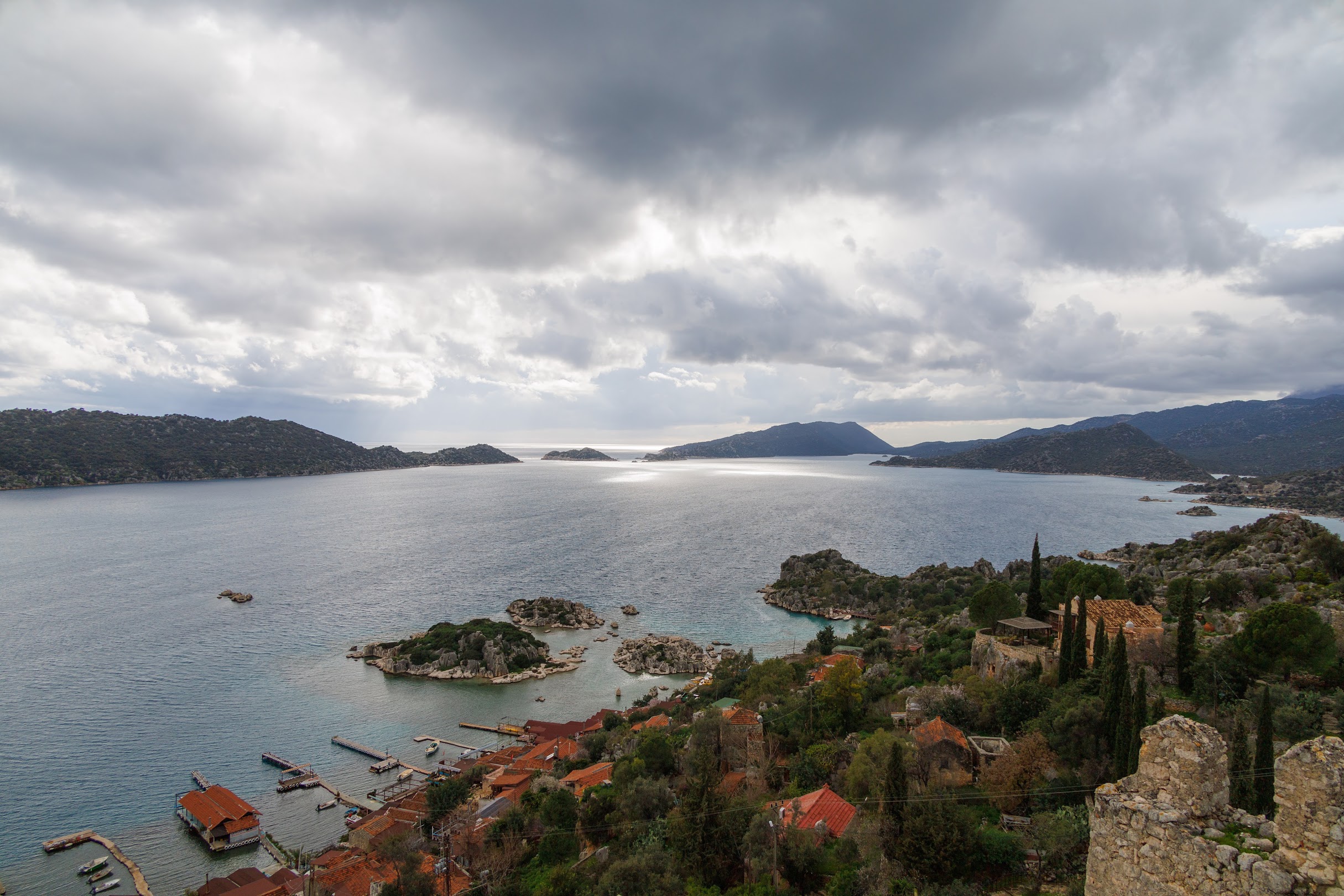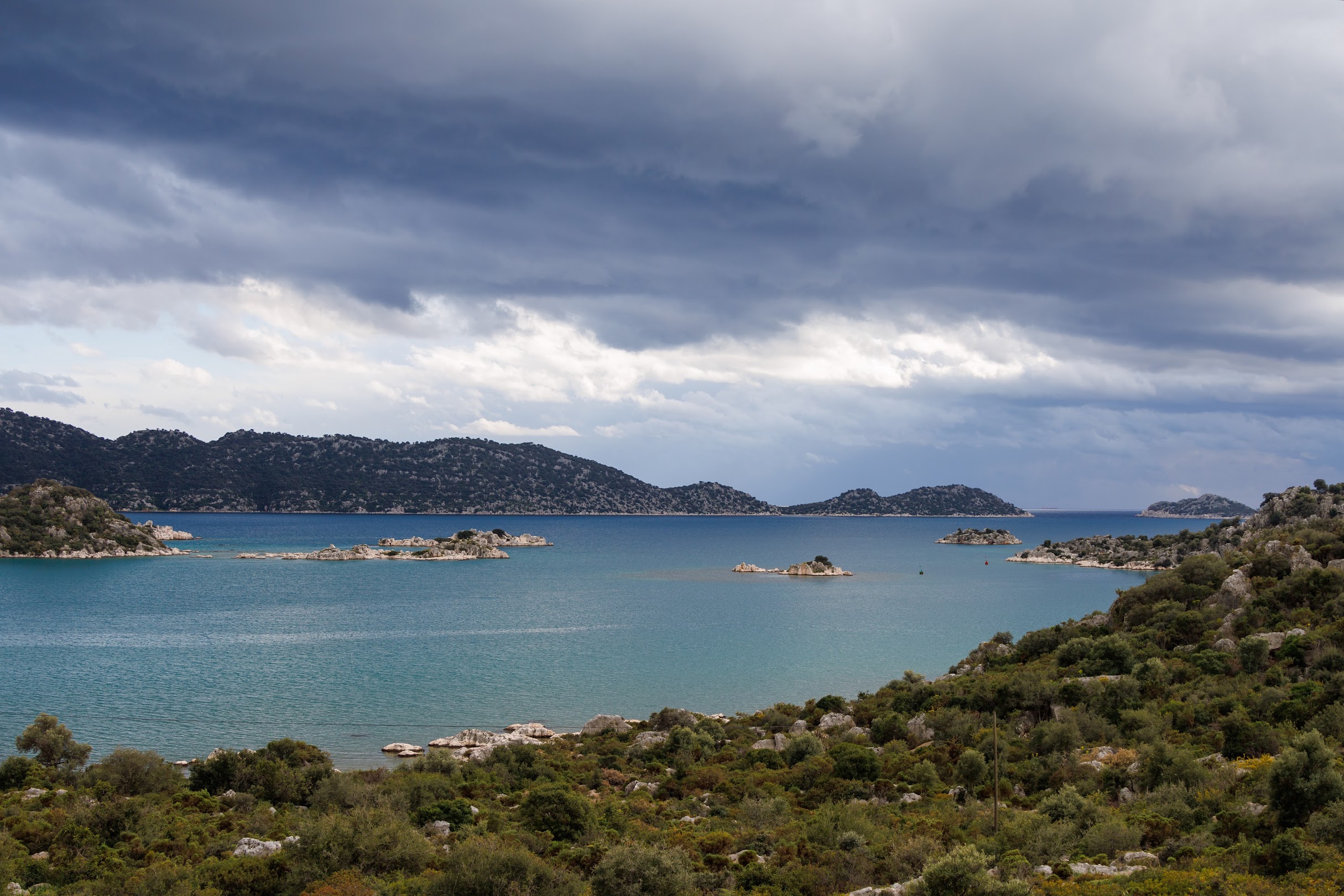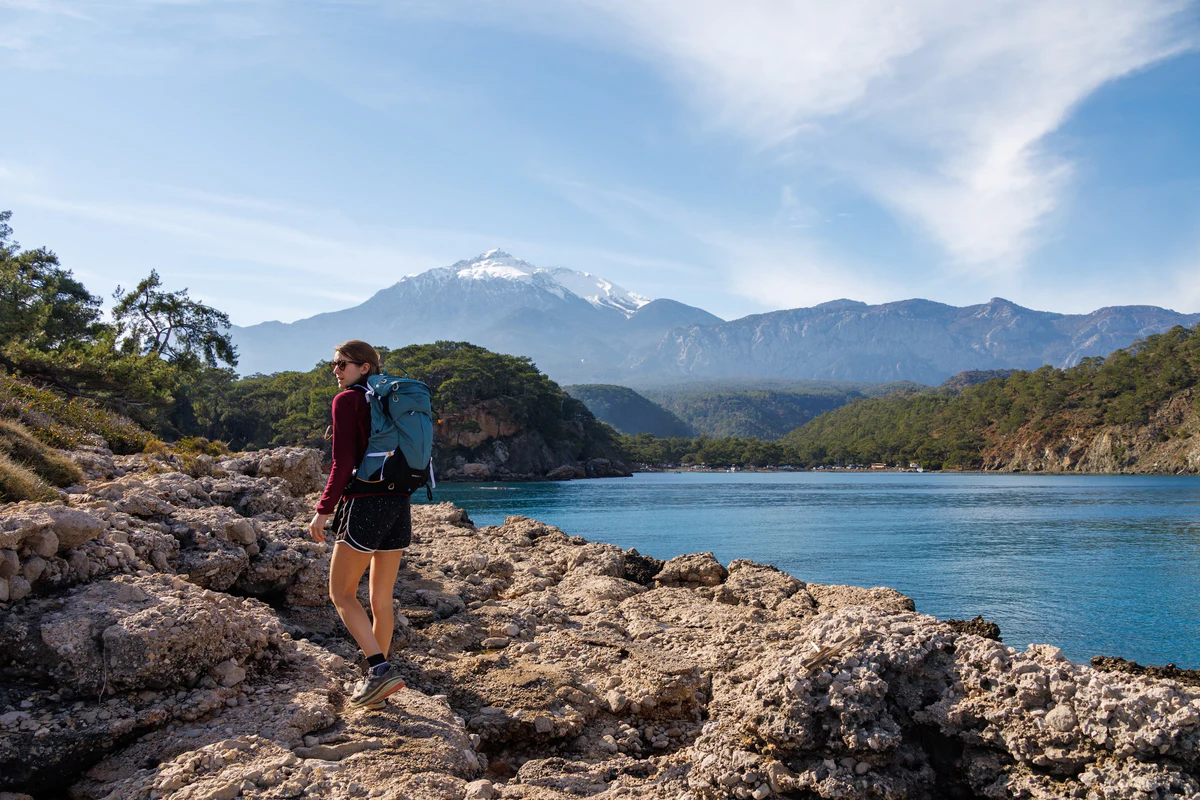
This guide goes month by month. If you are still choosing where on the route to walk, start with our guide to choosing a Lycian Way section and planning reliable stages.
A word on the numbers
Temperatures, sunshine and rainfall below are the official 1991–2020 climate normals for Antalya from the Turkish State Meteorological Service (MGM). Antalya sits at the eastern end of the route, at sea level, so treat these figures as a guide to the coast, not to the mountain stages: the trail regularly climbs several hundred metres above the sea, where it is cooler. MGM does not publish comparable normals for Fethiye or Kaş on its website, so we have not mixed in other stations. Sea temperatures are MGM's long-term (1970–2025) monthly averages for Türkiye's Mediterranean coast.
Best months at a glance
| Month | Avg. high, Antalya | Rain, Antalya | Sea | Sunshine per day | Walking conditions | Crowds |
|---|---|---|---|---|---|---|
| January | 15.0 °C | 210.6 mm | 16.7 °C | 4.9 h | Wet season; mild on the coast, colder higher up | Very quiet; some coastal places closed |
| February | 15.9 °C | 112.7 mm | 16.0 °C | 5.7 h | Changeable, with clear, mild spells | Very quiet |
| March | 18.4 °C | 94.5 mm | 16.6 °C | 6.5 h | Spring walking begins; rain still frequent | Quiet |
| April | 21.8 °C | 63.1 mm | 18.1 °C | 7.7 h | Very good: mild days, rain easing | Moderate |
| May | 26.4 °C | 37.0 mm | 20.8 °C | 9.4 h | Very good; warm by midday on the coast | Moderate |
| June | 31.6 °C | 10.1 mm | 23.9 °C | 11.0 h | Good early in the day; hot afternoons | Busier on the coast |
| July | 34.9 °C | 4.0 mm | 26.7 °C | 11.1 h | Too hot for long walks | Peak beach season |
| August | 34.9 °C | 5.0 mm | 28.1 °C | 10.5 h | Too hot for long walks | Peak beach season |
| September | 31.7 °C | 22.0 mm | 27.0 °C | 9.1 h | Hot at first, better as the month goes on | Busy early, easing |
| October | 27.3 °C | 76.6 mm | 24.6 °C | 7.5 h | Very good: warm days, warm sea | Moderate |
| November | 21.6 °C | 152.1 mm | 21.4 °C | 5.9 h | Good, with more rain as the month goes on | Quiet |
| December | 16.7 °C | 271.7 mm | 18.5 °C | 4.7 h | The wettest month; short days | Very quiet |
Temperature, rain and sunshine: MGM normals for Antalya, 1991–2020. Sea: MGM Mediterranean average, 1970–2025. Sunshine is average daily hours of bright sun, not day length. Walking conditions and crowd levels are our own assessment.
January and February: quiet, mild, often wet
Winter on the Lycian coast is mild by northern European standards: the average daily high in Antalya is 15.0 °C in January and 15.9 °C in February. It is also the rainy season. January averages 210.6 mm of rain over about 13 rainy days, and the higher stages are colder than the shore.
The Culture Routes Society, which maintains the route, counts February in its recommended season and says it is often warmer and sunnier than March. On long-term averages at Antalya, March is still slightly warmer and drier, so February is best seen as a month of good spells rather than a reliable one. There is also a practical point: the Ministry of Culture and Tourism's Lycian Way site warns that some coastal settlements, for example east of Finike, are holiday villages likely to be empty in winter, so shops and guesthouses you would count on in spring may be closed. Our programmes do not run in winter.
March: spring walking begins
If you are thinking of visiting Türkiye in March, the Lycian coast is one of the best places to walk. The Culture Routes Society's spring season runs from February to May, and March days reach an average high of 18.4 °C in Antalya: comfortable for climbing. The trade-off is rain. March still averages 94.5 mm over nearly ten rainy days, so leave a spare day in your plan and bring good waterproofs. The sea, at 16.6 °C on average, is for the brave.
April and May: the heart of the season
April and May are the months we would choose for a first Lycian Way walk. Average highs in Antalya rise from 21.8 °C in April to 26.4 °C in May, and rainfall drops to 63.1 mm and then 37.0 mm. Days are long, with 7.7 to 9.4 hours of sunshine on average. The sea warms from 18.1 °C to 20.8 °C: fresh in April, pleasant by late May.
Spring is the first of our two Lycian seasons. Our programmes there are the self-guided Lycian Way through the western coves and villages, the guided Lycian Way from Antalya to Kekova through the eastern forests and bays, and the eight-day Chimaera, Kekova & Termessos. Ask us for the current departure calendar.
June: early starts
June can still work on the Lycian Way, but the heat builds quickly. Antalya's average high jumps to 31.6 °C, and exposed south-facing slopes feel hotter still. Start walking at first light, aim to finish by early afternoon, and use the long evenings (about 11 hours of sunshine a day) for a swim in a sea that now averages 23.9 °C. Rain is rare: 10.1 mm in the whole month on average.
July and August: why we don't recommend them
The Culture Routes Society is clear: "Summer in Lycia is too hot for long walks." In Antalya, July and August both average highs of 34.9 °C, with almost no rain (4.0 mm and 5.0 mm). On the trail, that means long climbs in full sun on stony paths and a lot of water to carry.
There is a second reason: wildfire rules, described below. If you only have summer, walk short sections at dawn and spend the rest of the day by the sea, or look at mountain routes elsewhere in our hiking trips in Türkiye.
Wildfire rules: forests restricted until 31 October 2026
Every year, the provincial governorships set fire-season rules for forests. The Lycian Way crosses two provinces, and in 2026 their rules differ:
- Antalya province (from Patara and Kalkan east to Antalya). Circular 2026/3 of the Antalya Governorship, dated 4 May 2026, bans entry to forests across the province from 1 May to 31 October 2026, except in the areas listed in its annex. That list includes the Lycian Way's Geyikbayırı–Çıralı stretch, as an ecotourism area, and trekking routes designated by the Provincial Directorate of Culture and Tourism. The same circular bans overnight stays in state forests outside places designated by the forest administration.
- Muğla province (the Fethiye end, including Ölüdeniz, Faralya, Kabak and the villages above the Xanthos valley). General Order 2026/1 of the Muğla Governorship, dated 22 May 2026, bans entry to listed forests from 1 June to 31 October 2026. The list includes the Kayaköy–Ölüdeniz forests and the Faralya–Butterfly Valley forests. Tourism and sporting activities may enter these areas with the permission of the district governor and after informing the local forest directorate. The order also allows extra bans in critical weather.
In practice, walking independently in September or October means checking these rules for the exact stretch you plan to walk. On our trips, we plan the route around them. After 31 October 2026, the 2026 restrictions end; rules for 2027 will be set in new circulars.
September and October: the second spring
Autumn is the Lycian Way's other great season, and October in particular is a fine month to visit Türkiye for walking. September starts hot, with an average high of 31.7 °C in Antalya, but by October this falls to 27.3 °C. The big advantage over spring is the sea: 27.0 °C in September and 24.6 °C in October on average, the warmest of the walking months. Rain returns in October, with 76.6 mm on average over about six rainy days.
Autumn is the second of our two Lycian seasons; ask us for the current departure calendar. Before any independent walk in these months, read the wildfire rules above.
November: shorter days, emptier trails
The Lycian Way in November is quieter and still very walkable. The Culture Routes Society's autumn season runs to November, and the average high in Antalya is a comfortable 21.6 °C. The sea, at 21.4 °C on average, is about as warm as it is in late May. The catch is rain, which rises sharply: 152.1 mm over eight or nine rainy days on average. Days are shorter too, with about 5.9 hours of sunshine, so plan stages that finish well before dark.
Whether a given trip still runs in November depends on the year's calendar; ask us before planning a late-autumn departure.
December: the wettest month
December is the wettest month in Antalya, averaging 271.7 mm of rain over about 12 rainy days, with the least sunshine of the year. The Culture Routes Society does not include it in its recommended seasons. A few days of coastal walking between dry spells can be lovely, but it is not the month for a multi-day walk.
What to pack by season
Spring (March to May) and late autumn (November):
- A proper waterproof jacket and a warm layer for high stages and early mornings
- Boots or trail shoes with good grip for wet, stony paths
- A headtorch, especially in March and November when days are shorter
- Swimwear from May, if you don't mind cool water
Early summer and early autumn (June, September, October):
- Sun hat, sunglasses and high-factor sun cream
- Enough water capacity for the day's stage; check where the next fountain or village is before you set off
- Light, long-sleeved clothing for sun and thorny scrub
- Swimwear: this is the warmest sea of the walking year
All year:
- An up-to-date map or GPS track; the route changes and waymarks fade (the Culture Routes Society keeps the route current on OpenStreetMap)
- Walking poles for steep, stony descents
- A small first-aid kit and blister care
Guided or self-guided, by season
On a self-guided trip, you handle the weather and the fire-season rules day by day yourself; on a guided one, the route, timings and any detours are adjusted for you. On the guided Antalya to Kekova trek, English-speaking groups walk with a Turkish guide who speaks English; for other programmes, ask about the guide's languages when you enquire. For the whole region, see our Lycian Coast destination page, and for other regions, when to go hiking in Türkiye.
How this guide was prepared
Climate and sea figures come from the Turkish State Meteorological Service (MGM); seasons, route and forest rules from the Culture Routes Society, the Ministry of Culture and Tourism and the Antalya and Muğla governorships, listed above.
Seasons and practical advice for our own trips come from the programmes Aventures Anatoliennes runs on the Lycian coast.
Last updated: 27 September 2026.