Decide what to delegate
A guide can read the terrain, set the pace and adapt a stage. The exact role depends on the trip. On a self-guided itinerary, more decisions remain with you. A track and route book help, but they do not replace the ability to recognise an error and choose an exit option.
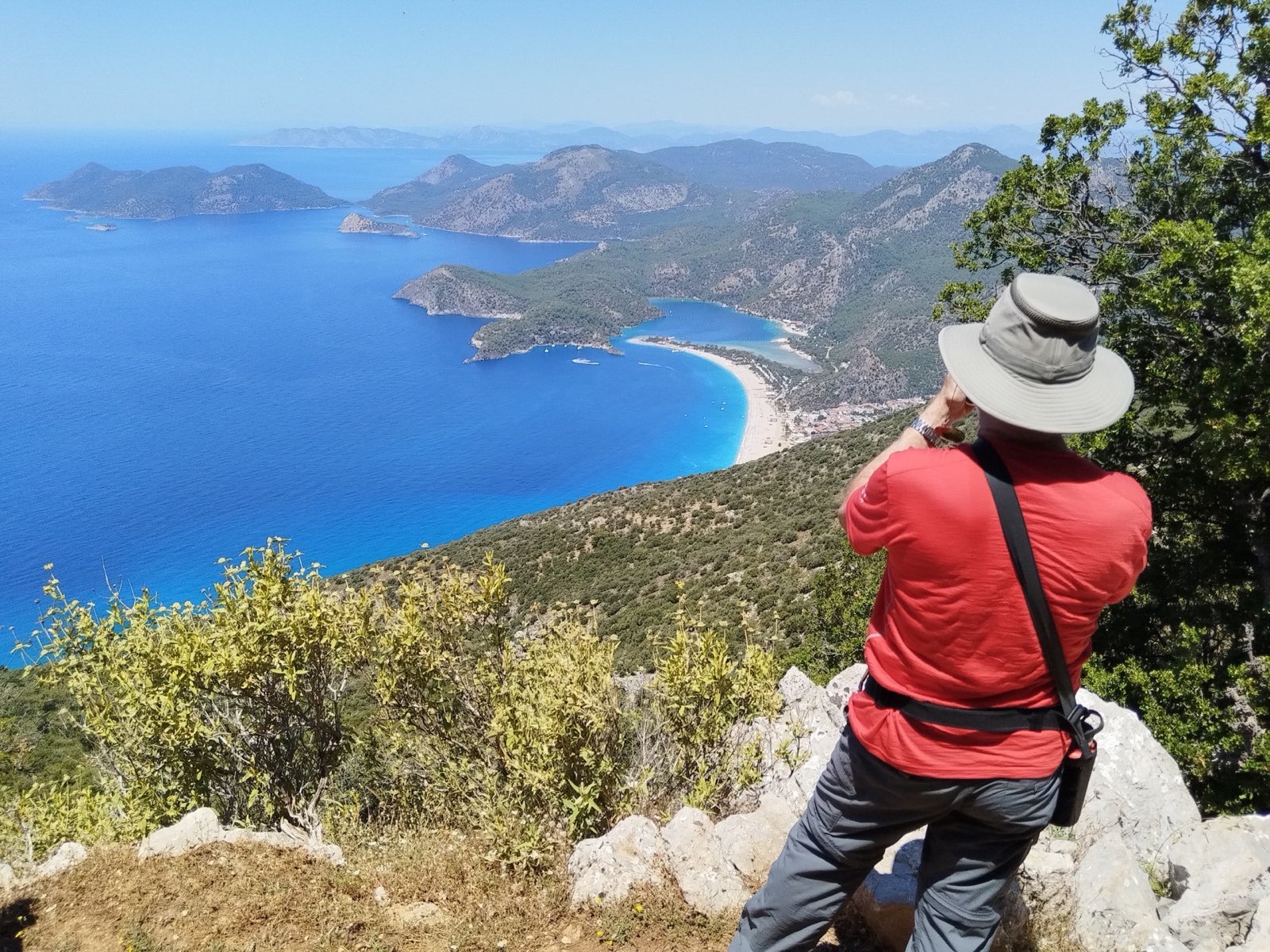
The self-guided Lycian Way trip is a concrete example: Ölüdeniz–Faralya, Faralya–Kabak, Kabak–Alınca and Alınca–Gey, followed by a day at Patara. Guesthouses are booked, luggage is transferred daily, and a route book and GPS tracks are provided. You manage the walk without a guide on the trail. This suits walkers who want to choose their breaks and can follow and reassess a route.
The guided journey from Antalya to Kekova combines different stages with organised connections. On day 11, a transfer takes you to Kılıçlı, the walk continues through Aperlai and Sıcak, then a boat returns to Üçağız. Compare this option if you prefer to delegate coordination and share terrain decisions with a guide. These are two different itineraries, rather than the same trek with or without a leader.
Assess practical self-reliance
Assess recent experience on similar ground. Can you navigate without mobile signal, deal with an unavailable water source and shorten a day when weather changes? Fitness alone is not enough. Navigation, risk awareness and transfer coordination also matter.
Check what is listed in writing
Check accommodation, pack transport, meals, transfers and assistance in the proposal. Do not assume a service is included because it is common elsewhere. Guided and self-guided formats both need clear boundaries around what support is included.
Choose for the route
An accessible valley and a remote traverse require different levels of self-reliance. Altitude, exposed passages, waymarking and exit options may make guiding preferable. The best format is the one that preserves the group’s safety margin.
Compare the guided and self-guided formats, then read the Lycian Way guide, the comparison of treks in Türkiye, the conditions and the FAQ.